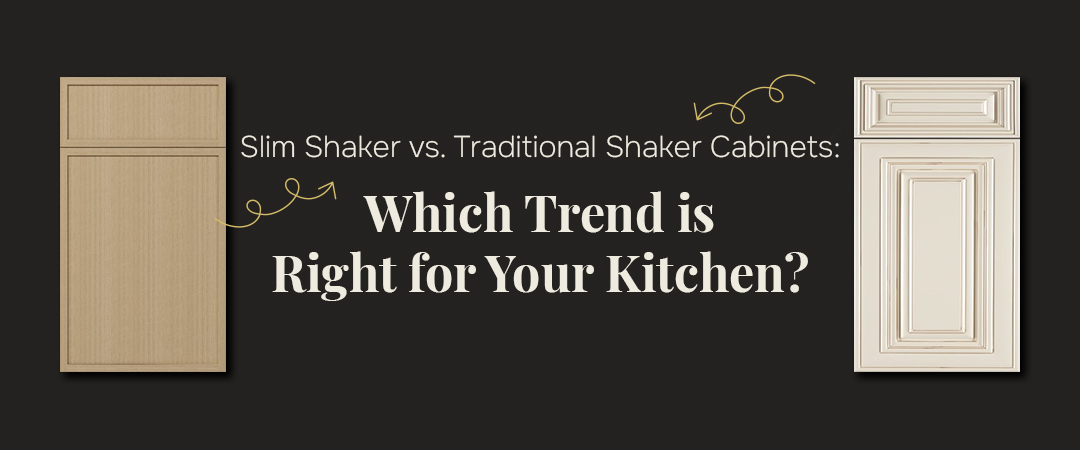
The classic Shaker cabinet has been the undisputed king of kitchen design for decades, praised for its simple five-piece construction, recessed center panel, and unmatched versatility. However, modern kitchen design in 2026 demands sleeker silhouettes and more refined details. Enter the Slim Shaker cabinet—also referred to as the micro-shaker or thin-frame shaker.
If you are planning a kitchen build or remodel, choosing between a Traditional Shaker and a Slim Shaker is one of the most critical aesthetic decisions you will make. While both honor clean geometric lines, they create distinct visual atmospheres.
In this guide, we breakdown the differences in framing width, design aesthetics, and maintenance, and help you select the ideal cabinet style from Nextier Cabinets.
Side-by-Side Comparison: At a Glance
| Feature | Traditional Shaker Cabinets | Slim Shaker Cabinets |
|---|---|---|
| Stile & Rail Width | Standard 2.5 inches to 3 inches | Narrow 0.5 inches to 1 inch |
| Visual Aesthetic | Classic, Craftsman, Transitional, Farmhouse | Modern, Scandinavian, Contemporary, Organic Modern |
| Panel Depth | Pronounced, deeper center recess | Shallow, subtle shadow lines |
| Versatility | Works across traditional to mid-century homes | Ideal for sleek, modern, and minimalist spaces |
| Popular Finish Pairings | Warm Hazelnut, Crisp White, Sable | Earthy Green, Natural Oakley, Onyx Oak |
Understanding the Differences
1. Frame Width & Shadow Lines
- Traditional Shaker: Characterized by wide stiles and rails (typically 2.5 to 3 inches broad). This produces a substantial, structural border with defined shadows inside the recessed panel.
- Slim Shaker: Features ultra-thin stiles and rails (often under 1 inch). The result is a crisp, pencil-thin frame that delivers subtle detail without the heavy visual weight of traditional millwork.
2. Architectural & Style Compatibility
- Traditional Shaker: Highly versatile across classic American home styles. It pairs effortlessly with traditional craftsman homes, transitional spaces, and modern farmhouse designs.
- Slim Shaker: The perfect bridge between traditional shaker and flat-slab European cabinetry. It appeals to homeowners seeking modern minimalism who still want subtle architectural depth rather than completely flat doors.
3. Hardware Requirements
- Traditional Shaker: Accommodates a broad range of hardware, from large standard pulls and knobs to traditional cup pulls centered on wider rails.
- Slim Shaker: Looks best with slim, minimalist hardware such as delicate bar pulls, integrated finger pulls, or simple minimalist knobs. Because the outer frame is narrow, hardware placement is clean and centered.
Nextier Cabinets Options for Every Style
At Nextier Cabinets, we offer premium construction across both traditional and contemporary door profiles, ensuring long-lasting durability for wholesale distributors, builders, and homeowners.
The Slim Shaker Collection
If you want to capitalize on 2026’s top kitchen trend, Nextier’s Slim Shaker lineup offers thin-profile precision in popular colorways:
- Slim Shaker Green: Delivers a fresh, modern aesthetic that anchors contemporary and organic-modern kitchen layouts.
- Slim Shaker Oakley: Highlights clean wood grain textures with modern narrow frames for a warm Scandinavian feel.
Product Spotlight: Nextier’s Slim Shaker collection offers all-plywood box construction, soft-close hardware, and full overlay doors for high-end aesthetic appeal and durability.
Traditional & Classic Finishes
For projects calling for timeless depth and traditional warmth, explore Nextier’s classic finishes:
- Onyx Oak: Rich, deep wood finish for bold, high-contrast spaces.
- Ice Oak: Bright, natural oak look that enhances ambient lighting.
- Savannah Hazelnut: Soft, warm wood tone perfect for transitional builds.
- Covington Sable: Sophisticated dark finish tailored for rich, traditional kitchens.
How to Choose: Which is Right for Your Kitchen?
Choose Slim Shaker Cabinets If:
- You want an updated, modern kitchen with sleek lines without resorting to completely flat panel doors.
- You are pairing your cabinets with organic modern materials like quartz, light oak, or matte black fixtures.
- You are aiming for maximum visual space in smaller or open-concept kitchen layouts.
Choose Traditional Shaker Cabinets If:
- You are renovating a historic, craftsman, or transitional style home where classic proportions are essential.
- You prefer bold hardware options like cup pulls or traditional oversized knobs.
- You want a broad, time-tested aesthetic that appeals to traditional home buyers.
FAQs
1. What is the main difference between Slim Shaker and Traditional Shaker cabinets?
The primary difference is the width of the outer frame (stiles and rails). Traditional Shaker frames are typically 2.5 to 3 inches wide, while Slim Shaker frames are significantly narrower (around 0.5 to 1 inch wide), offering a sleeker, more modern aesthetic.
2. Are Slim Shaker cabinets more expensive than regular Shaker cabinets?
Generally, high-quality RTA or pre-assembled Slim Shaker cabinets are competitively priced with traditional Shaker options. Pricing primarily depends on wood species, construction materials, and finish rather than frame width.
3. Are Slim Shaker cabinets harder to clean?
Slim Shaker cabinets are actually easier to maintain than traditional shaker cabinets because their shallow center recess collects less dust and debris in the inner frame corners.